
God as a Failed Parent?
The Inheritance of Accountability.

Namaskar, Aadab, Khush.aamdeed,
Welcome to Maze & Mez.
I. First Human Experience & Lasting Temptation.
Very few ideas enjoy the luxury of never having to defend their desirability— Development is one of them. For all our disagreements, humanity seems unusually united in its reluctance to become less developed. Few concepts enjoy such broad approval across politics, economics, education, culture and personal life.
Broad agreements often comes at the cost of precision. Everyone seems to want development but the difficulty begins when we ask what exactly is supposed to be developing. For the purpose of this essay, I want to make the question more specific. In psychology, growth and development are words we use so often that they begin to feel self-explanatory. They are not. What exactly grows? What changes when a person develops?
To explore that question, let us begin with a curious phenomenon: the manchild. The figure of the manchild offers a useful window into how we understand growth, dependence, maturity and the strange difficulty of becoming psychologically adult.
At first glance, this can appear to be a conversation about patriarchy. In many ways, it is. One of the more remarkable features of patriarchy is its ability to preserve childhood in some people while assigning adulthood to others. It often distributes responsibility unevenly, allowing certain forms of dependence to survive long after they have ceased to be developmentally useful. Yet the phenomenon itself may go beyond. Dependence appears across genders, relationships, institutions, and belief systems. The question, then, is not simply why some people remain dependent, but why dependence itself remains so attractive.
The desire to be cared for is not the problem. To be cared for is one of the earliest and most beautiful experiences available to us. We arrive in the world completely helpless and survive only because someone feeds us, protects us, comforts us and responds to our needs. Dependence is our first experience of being human, which perhaps explains why we spend so much of our lives trying to return to it!
Care and dependence can be mistaken for one another. Care is a virtue. Dependence is a condition. Both involve support, trust, and attachment. Yet they move in opposite directions. Care gradually expands a person’s capacity to navigate life. Dependence gradually transfers that capacity elsewhere.
As Erich Fromm observed in The Art of Loving, “Immature love says: ‘I love you because I need you.’ Mature love says: ‘I need you because I love you.’” Probably this is where the question of development begins to acquire larger meaning. Growth is not the disappearance of care, attachment, or interdependence. It is the gradual movement from dependence toward responsibility, from needing someone to carry life for us toward becoming capable of carrying our share of it ourselves.
II. Leaving Home, Keeping the Furniture.
The brochure version of adulthood is wonderfully efficient. You acquire a working knowledge of bureaucracy just sufficient to avoid disaster, and are thereafter presumed to have crossed some invisible threshold into maturity. But growing up is also described as a process of separation from parents and dependence. That separation is, in many ways inevitable. Here, something remains unresolved: the challenge of no longer requiring our parents or what they represented— to occupy the center of our psychological life.
This may be where we become stuck in development. The manchild is interesting not because the term describes a particular kind of person, but because it points to a possibility within all of us: the longing to hand over responsibility for navigating an uncertain world. We spend years believing we are becoming independent while quietly searching for someone or something to inherit the role our parents once played.
As Carl Jung observed throughout his work on individuation, maturity is not achieved by defeating one’s parents, rebelling against them or escaping their influence. Nor is it achieved by treating everyone else as a rival from whom one must prove independence. It is achieved by becoming one’s own person. Jung called this process individuation: the gradual and often uncomfortable integration of the different parts of the psyche into a more complete self.
In Jungian terms, growth requires confronting the shadow: the aspects of ourselves we would rather not acknowledge and loosening our identification with the persona: the social mask we present to the world. As long as we define ourselves solely through pleasing others, opposing them or living up to inherited expectations, we remain organized around forces outside ourselves.
Seen this way, maturity is not about replacing someone nor about proving that we need no one at all. It is about developing a center of gravity within oneself. Parents remain important, relationships remain meaningful, and communities remain valuable, but they no longer determine our identity. We can stay connected without being dependent, and we can be influenced without being defined.

III. Dependency Deluxe Edition.
If the previous chapter is correct, then the next step seems almost disappointingly easy to understand. Children rely on parents/caregivers because they provide a center. As children grow eventually, responsibility transfers. The center moves inward. Problem solved. At least, that is how the story is supposed to go.
Yet human beings have a peculiar habit. Just when it appears we are about to stand on our own, an enormous figure seems to wander back into the picture—older than any parent, wiser than any teacher, more permanent than any authority we have ever known. Almost as if, having solved the problem of dependence on our parents, we reinvented a parent large enough to replace them.
Parents age. Parents leave. Parents disappoint. Parents die. Unfortunately, the desire for guidance, protection, reassurance, and someone to explain what on earth is going on tends to outlive them.
So, in a stroke of psychological genius, we appear to have invented a parent who never retires. Not merely powerful. Parental. The phrase Param Pita means “Supreme Father,” while Param Ishwar refers to the “Supreme Lord” or ultimate divine authority. Together they capture a recurring human impulse: to imagine the highest reality not only as the ruler of existence, but also as the parent who watches over it.
Seen this way, religion looks less like a solution to dependence than a masterful upgrade of it. Faced with the unsettling task of becoming fully responsible for ourselves, we developed an eternal source of guidance, authority, and comfort. Hence, religion may be/(is) one of humanity’s most elegant workarounds.
If a culture repeatedly teaches people that authority is sacred, obedience is virtuous, doubt is dangerous and truth descends from above rather than emerging through inquiry, then religion may do more than satisfy a psychological need. It may help preserve entire structures of power.
When I first began writing this essay, I found myself directing criticism toward the fantasy of God as a parent. The argument seemed straightforward enough. If an all-powerful creator has already endowed human beings with intellect, agency, conscience, curiosity and the capacity to learn, then perpetual intervention begins to look strangely redundant. Why distribute responsibility only to repeatedly reclaim it? Why grant freedom while remaining unwilling to tolerate its consequences?
Taken seriously, one could even wonder whether such a parent genuinely wishes the child to grow beyond them. A parent confident in what they have given eventually steps back. A parent unable to step back risks turning guidance into control, care into supervision, and love into a permanent demand for attention.
What began as a critique of a failed parent slowly started to look more like a reflection on a reluctant child. And at that point, the argument became difficult to continue in the same direction. Because if the purpose of this essay has been to understand dependence, responsibility, and psychological adulthood then blaming God only recreates the very pattern I have spent these pages describing. It allows me to locate the problem elsewhere. It allows me to remain the child.
So rather than concluding that (fantasy of) God failed us, I am more interested in entertaining a less flattering possibility: that we became remarkably skilled at preserving dependence. That we kept inventing new centers, new authorities, and new parents because responsibility remained a burden we were never entirely eager to inherit.
For the purpose of this essay, then, I am willing to leave God alone.
IV. The Coldest Obituary.
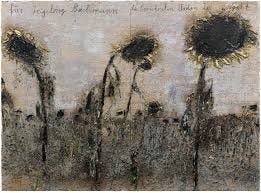
Few sentences in philosophy have carried the weight of Nietzsche’s declaration that God is dead. It remains one of the most profound and far reaching declarations ever made because it announces the death of the highest court of appeal. Suddenly there is no final parent, no authority waiting behind existence to explain existence. The universe does not become emptier. It becomes more demanding. That is why this essay belongs beneath that sentence. The death of God is not fundamentally a religious problem, it is a developmental one. It is the moment the baton changes hands. The generation before us has already played its innings. It has left behind institutions, values, myths, mistakes, wisdom, and unfinished work. The question is no longer what they believed, but what we intend to do with what they left us. Keep it, repair it, challenge it, abandon it, improve it those decisions now belong to us! Nietzsche was not announcing the absence of guidance. He was announcing the inheritance of responsibility.
V. Afterlife.
I lost God early.
I lost a real parent later.
Then I had to kill the ghost of God.
I realized what surviving someone really means to me— Not moving on, not finding closure, not proving resilience, simply discovering that life continues in their absence. The loss remains. The love remains. Yet something they gave you continues to function without them— A way of thinking, a way of caring, a way of carrying yourself through difficulty. Their presence no longer protects you, but it still shapes you.
The highest compliment I can imagine paying to a parent, a teacher, a friend, a partner, or anyone who has genuinely cared for another human being is this: their absence remained survivable. Not because they were easily replaced, nor because their loss became smaller, but because something essential of them had already been entrusted to others. What they gave had taken root deeply enough to endure beyond their presence.
May we be loved by people who leave us stronger than they found us.
May we learn to love people in ways that do not require us to remain at
the center of their world.
Everything after that is administration.
Death eventually removes every parent, child, professor, student, believer, skeptic and every argument about what any of it meant. It has never shown much interest in our conclusions/closures. We are free to keep debating development, dependence, responsibility and meaning. The deadline, un/fortunately, remains non-negotiable.
Zind.aabad.

The way you’ve captured the ache of tenderness with such profound generosity is truly beautiful, Pathik Bhai. Thank you for being a translator of these complex waters we all are giddying through.
Wow, so beautiful! 🌱